613 446-5039

613 446-5039

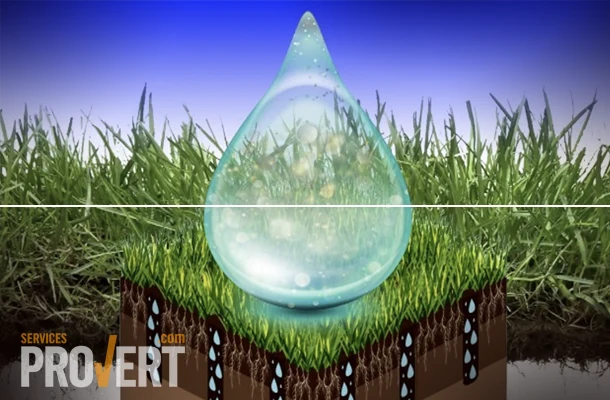
Liquid soil aeration is a modern method that gradually improves soil health and structure over time. Unlike traditional mechanical aeration, this technique uses liquid biostimulants that penetrate the soil and promote natural soil decompaction.
By improving the circulation of water, air, and nutrients in the soil, liquid aeration supports the development of deeper and stronger root systems. It also improves nutrient absorption and helps lawns better withstand environmental stress such as drought or heat.
This technique works deep within the soil without damaging the lawn surface and ensures uniform treatment across the entire lawn.
For best results, liquid aeration should be applied in the spring and fall, when the soil is biologically active and roots can fully benefit from the improved soil structure.
Benefits of Liquid Aeration
- Does not damage the lawn
- Safe for underground irrigation systems
- Non-invasive and safe application method
- Provides uniform soil decompaction
- Improves water and nutrient penetration
- Encourages deeper and stronger root systems
What is liquid lawn aeration?
Liquid aeration is a technique that uses biologically active liquid products to improve soil structure. These solutions help reduce soil compaction and improve the circulation of air, water, and nutrients in the soil.
What is the difference between liquid aeration and mechanical aeration?
Mechanical aeration removes small soil cores to create holes in the lawn. Liquid aeration works deep within the soil without puncturing the lawn, providing a more uniform treatment.
When should liquid aeration be done in Quebec?
In Quebec, the best times to perform liquid aeration are spring and fall, when soil activity is highest and roots can benefit from improved soil conditions.
Does liquid aeration work well in the Montreal climate?
Yes. In areas such as Montreal, Laval, Longueuil, Brossard, and the South Shore, freeze-thaw cycles can cause soil compaction. Liquid aeration helps improve soil structure and maintain a healthier, denser lawn.
Is liquid aeration safe for irrigation systems?
Yes. Unlike mechanical aeration, liquid aeration does not damage underground irrigation systems, wires, or buried installations.
Can liquid aeration replace mechanical aeration?
In many cases, yes. Liquid aeration can be an excellent alternative or complement to mechanical aeration, especially for residential lawns where avoiding visible holes is preferred.
Nous sommes partout
dans la région


