613 446-5039

613 446-5039

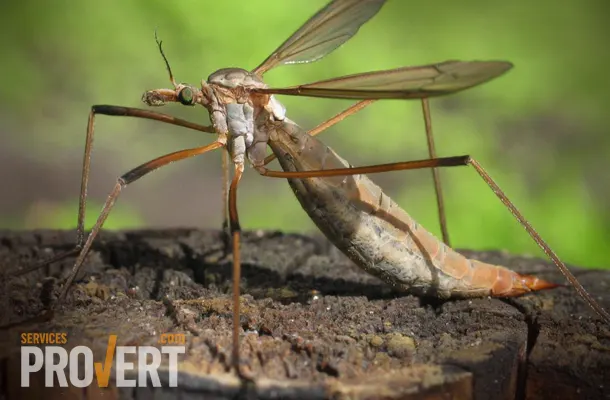
The European crane fly is an insect often mistaken for a large mosquito. Adult crane flies resemble oversized mosquitoes and typically measure between 1.5 and 2.5 cm in length.
Unlike mosquitoes, crane flies do not bite and are relatively poor fliers. Adults are commonly seen in late summer and early fall, especially around lawns and grassy areas.
Females lay their eggs near the soil surface, usually at a depth of about 1 cm. The eggs are black, shiny, oval-shaped, and approximately 1 mm long.
It is mainly the larvae that cause damage to lawns. They feed on grass shoots at night and grass roots during the day, which can weaken the turf and cause yellow patches or areas where the grass can be easily pulled up.
The crane fly typically completes its life cycle in one year. Adults emerge between mid-July and early October and quickly mate after emerging.
Signs of a Crane Fly Infestation
- Yellowing or thinning patches in the lawn
- Areas of turf that lift easily from the soil
- Increased bird activity pecking at the lawn
- Presence of gray or brown larvae in the soil
Regular lawn inspection helps detect these insects early and allows for timely intervention.
What is a crane fly?
A crane fly is an insect whose larvae can damage lawns by feeding on grass roots and young shoots.
Are crane flies dangerous to humans?
No. Adult crane flies look like large mosquitoes but they do not bite and do not transmit diseases.
When are crane flies active in Quebec?
In Quebec, adult crane flies usually emerge between mid-July and early October, while larvae can damage lawns for several weeks.
Are crane flies found in the Montreal area?
Yes. Crane flies are found throughout many regions of Quebec, including Greater Montreal, Laval, Longueuil, Brossard, the South Shore, and the North Shore, where they may occasionally damage lawns.
How can I tell if crane flies are affecting my lawn?
An affected lawn may show yellow patches, weak turf, or areas that lift easily, along with increased bird activity searching for larvae.
Can crane fly infestations be controlled?
Yes. Several lawn management and treatment methods can help reduce larval populations and protect lawn health.
Nous sommes partout
dans la région


