European Chafer in Lawns (White Grubs)
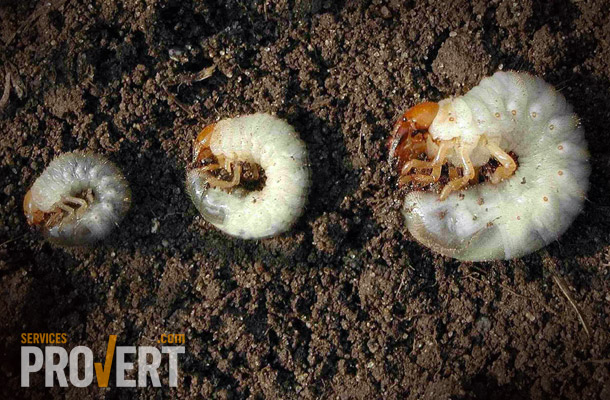
White grubs are insect larvae that live in the soil and can cause significant damage to lawns by feeding on grass roots.
Among the most common species found in Quebec are the European chafer and the Japanese beetle. These insects are considered major lawn pests because they attack the root system of turfgrass.
Depending on the species and temperature conditions, egg laying typically occurs from late May through July.
Once the eggs hatch, the larvae - commonly called white grubs - remain in the soil and feed on grass roots. This feeding weakens the turf, causing it to become yellow, thin, and easy to pull up from the soil.
As winter approaches, the larvae move deeper into the soil to overwinter. The following spring, they transform into pupae, then into adult beetles that emerge, mate, and lay a new generation of eggs.
The life cycle of white grubs varies depending on the species:
- Some species have one generation per year
- Others may have multiple generations per year
- Some species have a life cycle that lasts more than one year
For this reason, it is important to identify the type of white grub present in the lawn in order to determine the most effective treatment.
Signs of a White Grub Infestation
- Yellowing or thinning areas in the lawn
- Turf that lifts easily from the soil
- Increased activity from birds, skunks, or raccoons digging in the lawn
- Presence of C-shaped white larvae in the soil
Inspecting the soil is usually the best way to confirm the presence of white grubs.